
Why CRM Is No Longer Optional? When you ask, “How does a CRM help business to grow?”, the real answer […]
Read MoreComplete Step-by-Step Guide to Build & Optimize Your Real Estate Sales Funnel
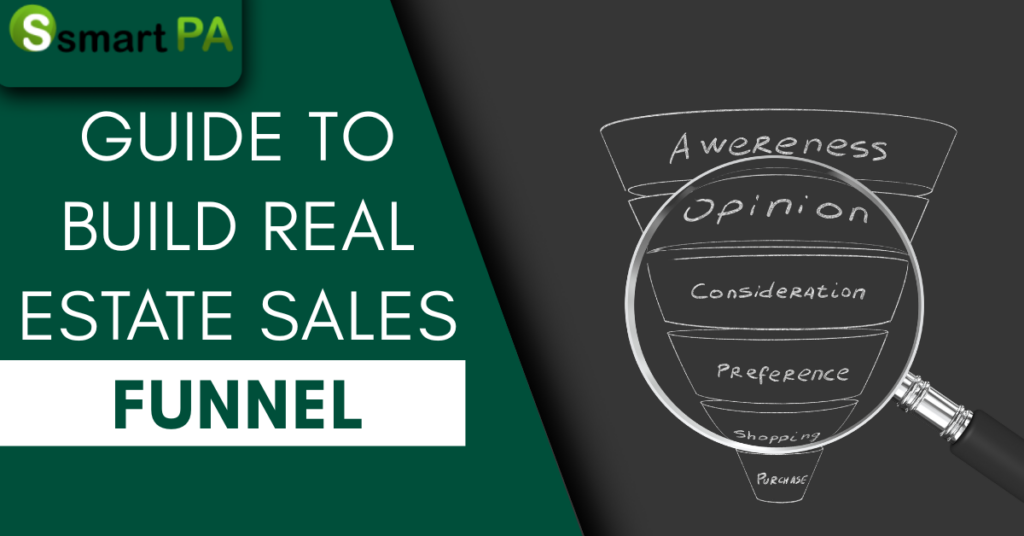
If you’re in real estate and still relying only on listings, portals, and random follow-ups, you’re leaving serious money on the table.
Over the years, I’ve seen one clear pattern: agents and developers who build a structured real estate sales funnel close more deals, waste fewer leads, and scale faster. Meanwhile, those without a defined funnel struggle with inconsistent revenue, low conversion rates, and chaotic follow-ups.
In this comprehensive guide, I will walk you step-by-step through:
- What a real estate sales funnel really is
- The exact sales funnel stages in the property business
- How to build sales funnel systems from scratch
- Do a marketing sales funnel differs from a B2B sales funnel
- How to automate and optimise your funnel for higher conversions
Let’s begin.
What Is a Real Estate Sales Funnel?
A real estate sales funnel is a structured process that guides potential buyers or sellers from their first interaction with your brand to closing a deal and beyond.
In simple words: A real estate sales funnel is the step-by-step journey a prospect takes — from awareness to final purchase — through defined sales funnel stages.
Instead of randomly handling leads, you move them systematically through stages like:
Awareness → Lead Capture → Qualification → Nurturing → Site Visit → Negotiation → Closing → Retention
Now, you might ask: Is this different from a marketing funnel? Well….Yes.
A marketing sales funnel focuses on attracting and educating prospects. A sales funnel focuses on converting them into paying clients.
Marketing generates attention. Sales closes the deal. However, in real estate, both are tightly connected. That’s why a powerful real estate sales funnel integrates marketing, follow-up, automation, and closing strategies.
Why Most Real Estate Businesses Fail Without a Structured Funnel
Let me be honest: most agents don’t lack leads — they lack systems.
Here’s what typically happens:
1. Lead Leakage
You run ads. You receive inquiries. But then:
- Forgot to follow up.
- Delay responses.
- You miss callbacks.
Studies consistently show that responding within 5 minutes can increase conversion chances dramatically. Yet many agents reply after hours or days.
That’s not a lead problem. That’s a funnel problem
2. No Segmentation
Not every lead is the same. Some are investors. Some are end-users. Some are just browsing.
Without segmentation inside your real estate sales funnel, you treat everyone equally — and that kills conversion.
3. Manual Tracking Chaos
Many agents still track leads in:
- Excel sheets
- Notebooks
- WhatsApp chats
As volume increases, confusion multiplies. Deals slip through the cracks.
4. High Cost Per Acquisition
If you spend ₹50,000 on ads but close only one deal due to poor funnel management, your cost per acquisition skyrockets.
However, if your funnel improves conversions even by 20–30%, profitability changes dramatically.
That’s the power of a structured build sales funnel approach.
Have doubts? Don't wait
The 7 Core Real Estate Sales Funnel Stages
Now, let me break down the complete sales funnel stages in real estate.
Stage 1: Awareness (Top of Marketing Sales Funnel)
At this stage, prospects don’t know you yet.
You create visibility through:
- SEO content
- Google Ads
- Facebook/Instagram Ads
- Property portals
- Social media
- Referrals
- Offline marketing
Here, your goal is simple: Attract the right audience into your marketing sales funnel. For example, a first-time home buyer searching “2BHK in Pune” enters your awareness stage.
Stage 2: Lead Capture
Once someone shows interest, you must capture their details. Effective methods include:
- Landing pages
- Website inquiry forms
- WhatsApp click-to-chat
- Facebook lead forms
- Open house registrations
At this point, automation becomes critical. If you want to properly build sales funnel, you must ensure:
- Instant confirmation message
- Immediate follow-up
- Data stored in CRM
Stage 3: Lead Qualification
This stage separates serious buyers from casual browsers.
It is always recommended to qualify leads based on:
- Budget range
- Buying timeline
- Location preference
- Loan approval status
- Buyer vs investor
- B2C vs B2B intent
Stage 4: Nurturing
Most deals are lost here. In real estate, buyers rarely purchase immediately. Therefore, nurturing becomes the backbone of your real estate sales funnel. You can nurture through:
- Email drip campaigns
- WhatsApp automation
- SMS reminders
- Property updates
- Market insights
- EMI calculators
- Consistency builds trust.
If you want to master how to build funnel properly, you must master follow-up systems
Stage 5: Property Presentation & Consultation
Now prospects are evaluating seriously. Activities include:
- Site visits
- Virtual tours
- Loan assistance
- Legal document explanation
- Investment projection analysis
At this stage, emotional selling and data-driven selling combine. For B2B sales funnel prospects, ROI presentations matter more than aesthetics.
Stage 6: Negotiation & Objection Handling
This is where many agents panic. Common objections include:
- “Price is too high.”
- “We are still comparing.”
- “Loan is not approved yet.”
- “Family needs time.”
Here, your funnel must include:
- Structured objection scripts
- Follow-up reminders
- Incentive triggers
- Deadline strategies
Stage 7: Closing & Post-Sale Retention
Closing is not the end. It’s a transition. After closing:
- Handle documentation smoothly
- Coordinate payment schedule
- Request referrals
- Collect testimonials
- Offer post-sale support
A smart real estate sales funnel always includes retention. Because repeat business and referrals reduce acquisition cost significantly.
How to Build a Real Estate Sales Funnel (Step-by-Step Blueprint)
Now let me walk you through this in a more detailed and practical way. If you truly want a high-converting real estate sales funnel, you cannot treat this as theory. You must design it intentionally, stage by stage.
Below is a structured, actionable blueprint you can immediately apply.
Step 1: Define Your Ideal Customer Profile (ICP)
Before you even think about running ads or creating landing pages, pause and define exactly who you want inside your funnel.
Ask yourself:
- Are you targeting first-time home buyers or investors?
- What is their budget range?
- Which locations are they interested in?
- Are they salaried professionals, business owners, or NRIs?
- What is their buying timeline (immediate, 3 months, 1 year)?
When you clearly define your Ideal Customer Profile, your real estate sales funnel becomes focused. Instead of attracting everyone, you attract the right prospects.
For example, if your ICP is “mid-income salaried buyers looking for 2BHK flats under ₹75 lakhs,” your messaging, ads, follow-ups, and offers will align perfectly with that audience.
Step 2: Map the Complete Customer Journey
Now that you know who you are targeting, the next step is mapping how they move from awareness to purchase.
Think in terms of:
- Where do they first discover you?
- What questions do they ask initially?
- What concerns arise before booking?
- How long does their decision-making process take?
When you map this journey, you define your sales funnel stages clearly. For example:
Ad → Website Visit → Inquiry → Phone Call → Site Visit → Follow-Up → Booking → Documentation
By visualizing this journey, you identify friction points. Maybe prospects drop off after site visits. Maybe they delay during negotiation. Once you see these gaps, you can improve specific stages of your funnel.
Step 3: Choose the Right Lead Generation Channels
A strong marketing sales funnel begins with consistent lead flow. However, trying to be everywhere is a mistake.
Instead, select 2–3 primary channels such as:
- Facebook & Instagram Ads for residential buyers
- Google Search Ads for high-intent buyers
- SEO blog content for long-term traffic
- Property portals for quick exposure
- Referral programs for warm leads
Each channel feeds prospects into your real estate sales funnel. However, every channel should connect to a structured landing page or lead capture system.
The key is alignment. Your messaging, targeting, and offers must match your ICP. Focused channels produce higher-quality leads, which makes your funnel more efficient.
Step 4: Build Strong Lead Capture Infrastructure
Now that traffic is coming in, you must capture it effectively.
Your infrastructure should include:
- Optimized landing pages with clear value propositions
- Simple inquiry forms (Name, Phone, Budget, Timeline)
- WhatsApp click-to-chat integration
- Instant auto-response confirmation
- CRM integration for data storage
Here is where many funnels break.
If a prospect submits a form and doesn’t receive a response within minutes, interest drops dramatically. Therefore, your build sales funnel process must include instant acknowledgment and automated follow-up.
Step 4: Build Strong Lead Capture Infrastructure
Now that traffic is coming in, you must capture it effectively.
Your infrastructure should include:
- Optimized landing pages with clear value propositions
- Simple inquiry forms (Name, Phone, Budget, Timeline)
- WhatsApp click-to-chat integration
- Instant auto-response confirmation
- CRM integration for data storage
Here is where many funnels break.
If a prospect submits a form and doesn’t receive a response within minutes, interest drops dramatically. Therefore, your build sales funnel process must include instant acknowledgment and automated follow-up.
Step 4: Build Strong Lead Capture Infrastructure
Step 5: Implement Automation and CRM Systems
This step transforms your funnel from manual to scalable.
Automation allows you to:
- Send instant WhatsApp responses
- Trigger email drip sequences
- Assign leads to sales executives
- Schedule follow-up reminders
- Score leads based on engagement
- Track communication history
Without automation, follow-ups become inconsistent. And in real estate, inconsistency kills deals. A properly automated real estate sales funnel ensures:
- No lead is forgotten
- Every prospect receives timely communication
- Sales teams stay accountable
Step 6: Create Structured Follow-Up Workflows
Your prospects should not float randomly inside your funnel. They should move through predefined workflows.
For example:
Facebook Ad → Landing Page → Auto WhatsApp Welcome → Sales Call → Site Visit → Post-Visit Follow-Up → Objection Handling → Limited-Time Offer → Closing
Each step must have:
- Defined communication scripts
- Time-based triggers
- Reminder alerts
- Escalation process
For B2B prospects in a B2B sales funnel, workflows may include:
Initial Meeting → Proposal Presentation → ROI Discussion → Negotiation → Contract Signing
When workflows are structured, conversion improves because nothing depends purely on memory or mood.
Step 7: Track, Measure, and Optimize Funnel Metrics
Finally, a powerful real estate sales funnel is data-driven.
You must track:
- Lead-to-call ratio
- Call-to-site visit ratio
- Site visit-to-booking ratio
- Average response time
- Cost per lead (CPL)
- Cost per acquisition (CPA)
For example, if you notice many leads but few site visits, the problem might be qualification or communication.
If site visits are high but bookings are low, negotiation or pricing strategy may need improvement. Tracking numbers allows you to optimize specific sales funnel stages instead of guessing.
Here is an in-depth article on Your Ultimate Guide to Real Estate Sales Process (2026)
Key Metrics in a Real Estate Sales Funnel (Detailed Explanation)
If you truly want your real estate sales funnel to generate predictable revenue, you must track numbers — not just activities.
Many agents say, “We are getting leads,” but they cannot answer:
- How many convert?
- Where are we losing prospects?
- What is our cost per deal?
1. Lead Conversion Rate
Definition:
The percentage of leads that turn into actual booked deals.
Formula:
(Number of Deals Closed ÷ Total Leads Generated) × 100
For example:
If you generate 200 leads and close 10 deals, your conversion rate is 5%.
Why It Matters
This metric tells you how effective your overall real estate sales funnel is. If your conversion rate is low:
- Your qualification process may be weak.
- Your follow-up system may be inconsistent.
- Your negotiation stage may need improvement.
Even a small increase — say from 5% to 7% — can significantly boost revenue without increasing ad spend.
2. Cost Per Lead (CPL)
Definition:
The amount you spend to acquire one lead.
Formula:
Total Marketing Spend ÷ Total Leads Generated
For example:
If you spend ₹50,000 on ads and generate 500 leads, your CPL is ₹100.
Why It Matters
CPL measures the efficiency of your marketing sales funnel. However, low CPL does not always mean high profitability. You might generate cheap leads that never convert. Therefore, CPL should always be analyzed along with conversion rate.
3. Cost Per Acquisition (CPA)
Definition:
The cost required to close one deal.
Formula:
Total Marketing Spend ÷ Total Deals Closed
For example:
If you spend ₹50,000 and close 5 deals, your CPA is ₹10,000 per deal.
Why It Matters
CPA shows whether your build sales funnel strategy is profitable. If your average commission per deal is ₹1,50,000 and your CPA is ₹10,000, you are operating efficiently.
But if your CPA rises too high, your funnel needs optimization — either at the lead quality stage or the conversion stage.
4. Response Time
Definition:
The time taken to respond to a new inquiry.
Why It Matters
In real estate, speed equals trust.
If you respond within 5 minutes:
- Engagement increases.
- Appointment booking probability rises.
- Competitors lose advantage.
If you respond after 6–8 hours:
- Lead interest drops.
- Competitors may already have scheduled site visits.
A well-automated real estate sales funnel ensures instant auto-responses and quick follow-ups.
5. Lead-to-Appointment Ratio
Definition:
The percentage of leads that agree to a call or site visit.
Formula:
(Number of Appointments ÷ Total Leads) × 100
Why It Matters
This metric measures how well you qualify and communicate.
If you get many leads but few site visits:
- Your messaging may not align with your ICP.
- Your sales team may not be persuasive.
- Your pricing may be mismatched.
Improving this stage strengthens mid-funnel performance.
6. Customer Lifetime Value (CLV)
Definition:
The total revenue generated from a client, including referrals and repeat transactions.
Why It Matters
Real estate is not just about one deal.
A satisfied buyer may:
- Refer 2–3 more clients.
- Invest again.
- Upgrade property later.
If your real estate sales funnel includes post-sale nurturing, CLV increases significantly. This reduces future acquisition costs and builds long-term business stability.
Have a query?
Common Mistakes in Real Estate Sales Funnels (Detailed Explanation)
Even the best marketing campaigns fail if the real estate sales funnel is poorly structured.
Over the years, I’ve noticed something important: most agents don’t fail because of lack of effort — they fail because of funnel mistakes. Small gaps in the sales funnel stages quietly reduce conversions and increase costs.
Let me break down the most common mistakes and explain why they hurt your business.
1. No Clearly Defined Sales Funnel Stages
One of the biggest mistakes is not defining proper sales funnel stages.
Many agents treat every lead the same. They don’t distinguish between:
- New inquiries
- Warm prospects
- Site visit completed leads
- Negotiation-stage buyers
When stages are unclear, follow-ups become random. Some prospects are contacted too frequently, while others are forgotten.
Why this is dangerous:
- Sales teams don’t know what action to take.
- Leads stay stuck without progress.
- Revenue forecasting becomes impossible.
A structured real estate sales funnel clearly defines what happens at each stage and what action moves a lead forward.
2. Slow Response Time
Speed matters more than most people realize.
When someone fills out a property inquiry form, they are actively comparing options. If you respond after 4–6 hours, chances are a competitor has already scheduled a site visit.
This mistake damages your marketing sales funnel effectiveness because:
- You paid for the lead.
- Interest was high.
- But delayed action killed momentum.
An optimized build sales funnel system must include:
- Instant auto-response
- Immediate call notification
- Structured first-contact script
3. No Lead Qualification Process
Another major issue is failing to qualify leads properly.
Without qualification, you may spend hours following up with:
- Low-budget buyers
- Time-pass inquiries
- People outside your service location
This drains energy and reduces productivity.
A healthy real estate sales funnel includes clear qualification questions like:
- What is your budget range?
- When are you planning to buy?
- Are you pre-approved for a loan?
- Are you an investor or end-user?
Qualification improves efficiency and ensures your sales team focuses on high-probability prospects.
4. No Structured Follow-Up System
Many agents rely on memory to follow up.
They think:
“I’ll call them tomorrow.”
“I’ll message them next week.”
But without reminders and workflows, leads get forgotten.
Real estate decisions often take weeks or months. If you don’t stay consistently present, prospects lose interest or choose another agent.
A strong real estate sales funnel includes:
- Automated follow-up reminders
- Drip email campaigns
- WhatsApp sequences
- Scheduled re-engagement messages
Consistency converts. Random effort does not.
5. Weak Objection Handling at the Negotiation Stage
Another silent killer in a real estate sales funnel is poor objection management.
Common objections include:
- “We need more time.”
- “The price seems high.”
- “We are comparing other projects.”
If your team lacks structured objection-handling scripts, deals stall.
Especially in a B2B sales funnel, negotiation complexity increases due to bulk pricing and commission discussions.
Training, documentation support, and limited-time incentives can dramatically improve this stage.
CONCLUSION
At the end of the day, success in real estate is not about chasing more leads — it’s about managing them better.
A well-structured real estate sales funnel transforms your business from reactive selling to systematic growth. Instead of depending on memory, mood, or manual follow-ups, you create defined sales funnel stages that guide every prospect from awareness to closing — and even beyond.
When you clearly:
- Define your ideal customer
- Build sales funnel stages intentionally
- Implement automation
- Segment properly
- Track key metrics
- Optimize continuously
—you stop guessing and start scaling.
Frequently Asked Questions (FAQs)
What is a real estate sales funnel?
A real estate sales funnel is a structured process that guides prospects from awareness to property purchase through defined sales funnel stages like lead capture, nurturing, negotiation, and closing.
How do you build a sales funnel for real estate?
To build sales funnel systems, define your audience, map the journey, create lead capture mechanisms, automate follow-ups, track metrics, and optimise continuously.
What are the main sales funnel stages?
The core sales funnel stages are awareness, lead capture, qualification, nurturing, presentation, negotiation, closing, and retention.
What is the difference between marketing sales funnel and sales funnel?
A marketing sales funnel attracts and educates prospects, while the sales funnel converts qualified leads into paying customers.
What is a B2B sales funnel in real estate?
A B2B sales funnel focuses on partnerships with developers, brokers, and investors. It is ROI-driven and typically has a longer sales cycle.
Additional Resources

Complete Step-by-Step Guide to Build & Optimize Your Real Estate Sales Funnel
If you’re in real estate and still relying only on listings, portals, and random follow-ups, you’re leaving serious money on […]
Read More
Your Ultimate Guide to Real Estate Sales Process (2026)
he real estate sales process is a structured sequence of steps that real estate agents, brokers, and developers follow to […]
Read More
Your Complete Guide to Real Estate Marketing Automation | 2026
Real estate marketing automation is the process of using technology to automatically attract, nurture, and convert property leads through personalized, […]
Read More