
Why CRM Is No Longer Optional? When you ask, “How does a CRM help business to grow?”, the real answer […]
Read MoreHow Does a CRM Help a Business Grow? (Complete 2026 Guide)
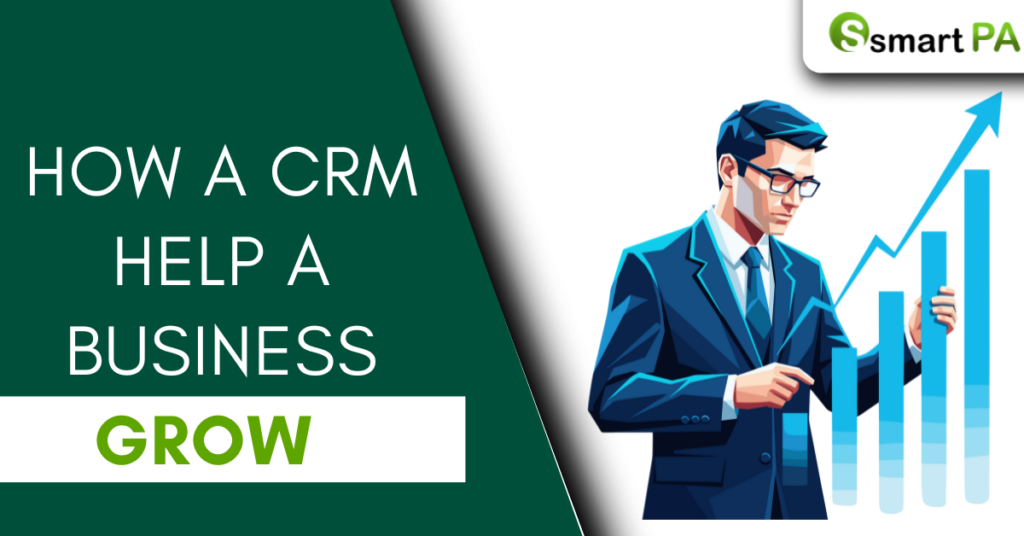
Why CRM Is No Longer Optional?
When you ask, “How does a CRM help business to grow?”, the real answer lies in structure, automation, and visibility.
Today, I see businesses generating leads from websites, WhatsApp, Instagram, referrals, and ads — but struggling to manage them properly. Consequently, follow-ups are missed, customer data is scattered, and revenue becomes unpredictable.
This is exactly where CRM becomes the backbone of growth. Growth is not just about more leads. It is about better systems.
Therefore, in this guide, I will explain:
- How CRM helps in business growth
- How does CRM improve operational efficiency
- The connection between CRM and business growth
- Advanced benefits competitors rarely explain
- Practical use cases and implementation guidance
Let’s start from the foundation.
1. What Is a CRM and Why Is It Essential for Modern Businesses?
CRM stands for Customer Relationship Management. However, I don’t define it as just software. I define it as a growth management system.
A CRM:
- Stores all customer data in one place
- Tracks every interaction
- Organises sales pipelines
- Automates tasks
- Provides insights for smarter decisions
Instead of using spreadsheets, notebooks, or memory, a CRM centralises everything in one intelligent platform
Spreadsheet vs CRM
Spreadsheet | CRM |
Manual data entry | Automated lead capture |
No reminders | Automated follow-ups |
No visibility | Sales dashboards |
Data errors | Structured workflow |
Therefore, if you want predictable growth, you need structured systems.
Why Businesses Without CRM Struggle to Scale
Let me be direct: growth without structure leads to chaos.
Without CRM:
- Leads are forgotten
- Sales teams lack accountability
- Managers cannot forecast revenue
- Customer complaints go unnoticed
- Marketing ROI remains unclear
So when someone asks me, “How CRM helps in business?”, my answer is simple: it prevents revenue leakage.
Have doubts? Don't wait
2. How Does a CRM Help a Business Grow? (Core Growth Pillars)
Now, let’s answer the primary keyword in depth.
1. Improves Lead Management and Conversion Rates
This is where business growth begins.
A CRM:
- Captures leads automatically from websites and ads
- Assigns them to sales reps instantly
- Tracks follow-ups
- Prioritises hot prospects
Lead Scoring
Instead of chasing every lead equally, CRM ranks them based on interest and behaviour. Therefore, sales teams focus on high-probability deals.
Faster Response Time
Studies consistently show that faster responses increase conversion rates dramatically. A CRM sends instant notifications, ensuring no delay.
As a result, conversion rates improve — and improved conversion means higher revenue without increasing marketing spend.
2. Increases Sales Productivity
Growth is not only about more leads. It is about efficiency.
CRM automates:
- Follow-up reminders
- Email sequences
- Task scheduling
- Deal stage updates
Consequently, sales representatives spend more time selling and less time managing data.
Pipeline Visibility
Managers can:
- See deals in each stage
- Identify bottlenecks
- Forecast monthly revenue
This clarity directly supports CRM and business growth.
3. Enhances Customer Retention and Lifetime Value
Acquiring a new customer costs more than retaining one. CRM helps you:
- Track purchase history
- Send renewal reminders
- Automate birthday greetings
- Monitor complaints
- Personalise communication
360-Degree Customer View
With CRM, I can see:
- Past purchases
- Communication history
- Support tickets
- Payment records
As a result, service becomes proactive instead of reactive. Retention increases. Lifetime value increases. Revenue stabilises. That is how CRM helps in business long term.
Here is an in-depth article on All in One Real Estate CRM Software.
3. How Does CRM Improve Operational Efficiency?
CRM improves operational efficiency by automating repetitive tasks, centralising data, streamlining workflows, reducing manual errors, improving collaboration, and providing real-time insights that eliminate guesswork and delays.
Now, let’s break this down clearly.
Automation reduces operational friction and removes repetitive manual work, allowing teams to focus on high-value activities like selling and relationship building.
Automation Reduces:
- Manual follow-ups
The CRM automatically schedules reminders and sends follow-up notifications, ensuring no prospect or customer is forgotten. - Data duplication
It prevents multiple entries of the same contact by detecting duplicates and centralising records in one structured database. - Human errors
By automating workflows and standardising processes, CRM reduces mistakes caused by manual data entry or missed steps
Centralised Data Management
Centralised data management means storing all customer, sales, and operational information in one unified system, ensuring accuracy, accessibility, and consistency across the organisation.
Instead of Data Being Scattered Across Departments:
- Sales data in one place, marketing data in another
CRM consolidates all departmental data into a single platform, eliminating silos and ensuring everyone works with the same information. - Customer communication stored separately in emails or chats
All interactions — calls, emails, messages, and notes — are recorded inside the CRM, creating a complete communication history. - Reports maintained in separate spreadsheets
Instead of multiple disconnected reports, CRM generates real-time dashboards that pull live data from all activities.
Therefore:
- No confusion
Since everyone accesses the same updated records, misunderstandings and misaligned communication are significantly reduced. - No duplicate records
CRM automatically detects and merges duplicate entries, keeping the database clean and reliable. - No miscommunication
With shared visibility into customer history and deal status, teams avoid conflicting information or repeated outreach.
Better Team Collaboration
A CRM improves collaboration by connecting all departments through shared data, transparent workflows, and real-time visibility. As a result, teams stop working in isolation and start working as one coordinated unit.
CRM Connects:
- Sales: Sales teams can track every lead, follow-up, and deal stage in real time, ensuring accountability and smooth handovers.
- Marketing: Marketing teams can see which campaigns generate qualified leads and adjust strategies based on actual sales outcomes.
- Customer Support: Support teams access full customer history, including purchases and past interactions, enabling faster and more personalised resolutions.
- Management: Leadership gains a complete overview of performance metrics, allowing informed decision-making and strategic planning.
Everyone Sees the Same Data
- Marketing understands lead quality
By viewing conversion data inside the CRM, marketing can identify which sources generate high-value customers. - Sales understands campaign source
Sales reps can see where each lead originated, allowing more contextual and personalised conversations. - Support sees purchase history
Support agents immediately understand customer background, which reduces resolution time and improves satisfaction.
Workflow Standardisation
Workflow standardisation means defining clear, repeatable processes inside the CRM so that every team member follows the same structured steps. As a result, operations become consistent, measurable, and scalable.
With CRM:
- Sales processes become structured
Every deal moves through predefined stages (e.g., Lead → Qualified → Proposal → Closed), ensuring no critical step is skipped. - Approvals are automated
When discounts, special pricing, or exceptions are requested, the CRM automatically routes them to the appropriate manager for approval. - SOPs are integrated
Standard Operating Procedures are embedded into the system, guiding employees step-by-step within the workflow itself. - Task sequences are predefined
Each stage automatically triggers specific tasks, ensuring follow-ups and actions happen on time. - Performance becomes measurable
Since processes are standardised, managers can track stage-wise performance and identify bottlenecks easily.
Reduced Operational Costs
A CRM reduces operational costs by eliminating inefficiencies, minimising manual labour, and preventing revenue leakage. As a result, businesses spend less while achieving more output and better results.
By Reducing:
- Manual administrative work
CRM automates repetitive tasks like data entry, follow-ups, and reporting, which reduces the need for additional administrative staff. - Human errors
Automated workflows and validation rules minimise costly mistakes such as incorrect data entry, missed follow-ups, or duplicate records. - Rework and miscommunication
Since all departments access the same real-time data, misunderstandings and repeated efforts are significantly reduced. - Lead leakage
CRM ensures every lead is tracked and followed up, preventing potential revenue from slipping through unnoticed. - Unnecessary marketing spend
By tracking campaign performance accurately, CRM helps businesses invest only in channels that generate measurable returns. - Customer churn
Automated reminders and proactive engagement reduce customer drop-offs, saving the high cost of acquiring new customers.
- Manual administrative work
4. CRM and Business Growth: The Data-Driven Advantage
When people ask me, “How does a CRM help a business grow?”, one of the strongest answers I give is this: CRM turns raw data into strategic decisions.
Growth without data is guesswork. However, growth powered by CRM analytics is calculated, measurable, and scalable.
Sales Forecasting and Revenue Prediction
One of the biggest growth challenges businesses face is uncertainty.
Questions like:
- How much revenue will we generate next month?
- Which deals are likely to close?
- Are we on track to hit targets?
A CRM answers these with real-time forecasting.
CRM tracks:
- Deal stages
- Probability of closure
- Average sales cycle length
- Conversion rates
Based on this data, it predicts expected revenue. As a result:
- You plan hiring better
- You manage cash flow smarter
- You invest marketing budgets confidently
Therefore, CRM does not just track sales — it makes growth predictable.
Customer Segmentation for Targeted Growth
Not all customers are equal. Some generate higher revenue, some churn faster, and some refer others. CRM allows you to segment customers based on:
- Purchase behaviour
- Location
- Industry
- Engagement level
- Buying frequency
Consequently, you can personalise campaigns and offers. For example:
- High-value customers receive premium offers
- Inactive customers receive re-engagement campaigns
- New leads receive nurturing sequences
Thus, instead of generic communication, CRM enables strategic targeting — which directly increases conversions.
Performance Tracking and KPI Visibility
Without visibility, growth becomes inconsistent.
CRM dashboards provide real-time insights such as:
- Daily sales numbers
- Lead-to-conversion ratio
- Campaign performance
- Sales rep productivity
- Customer retention rates
Therefore, managers no longer rely on weekly manual reports.
They can instantly:
- Identify bottlenecks
- Spot underperforming areas
- Optimise strategy
This real-time visibility significantly improves operational efficiency and strategic planning.
Identifying Bottlenecks Before They Become Problems
Many businesses lose revenue due to invisible inefficiencies. nFor example:
- Leads stuck too long in one stage
- Sales reps missing follow-ups
- High drop-offs after proposals
CRM highlights these issues through data. Consequently:
- Managers intervene early
- Processes improve continuously
- Revenue leakage reduces
This proactive approach is a major reason why CRM helps in business growth.
Have doubts? Don't wait
Identifying Bottlenecks Before They Become Problems
Many businesses lose revenue due to invisible inefficiencies. nFor example:
- Leads stuck too long in one stage
- Sales reps missing follow-ups
- High drop-offs after proposals
CRM highlights these issues through data. Consequently:
- Managers intervene early
- Processes improve continuously
- Revenue leakage reduces
This proactive approach is a major reason why CRM helps in business growth.
6. CRM and Scalability: Preparing for Expansion
Growth sounds exciting — but in reality, growth creates complexity.
When your business moves from handling 50 leads a month to 5,000 leads, or from one office to multiple branches, your existing systems often break down. Spreadsheets become unmanageable. Communication gaps widen. Accountability reduces.
This is exactly where CRM becomes your scalability engine.
Managing Thousands of Leads
When your business grows, lead volume increases dramatically. Without a CRM:
- Follow-ups get delayed
- Leads get lost
Sales reps become overwhelmed - Conversion rates drop
However, with a CRM:
- Leads are automatically captured from all sources
- They are distributed instantly to the right team members
- Follow-ups are scheduled automatically
- Pipeline stages track progress clearly
As a result, even if lead volume increases 10x, your system remains stable. This is how CRM helps in business growth without operational breakdown.
Supporting Multi-Branch Operations
When you expand into new cities or regions, managing operations manually becomes chaotic. You face challenges like:
- Inconsistent processes across branches
- No central performance visibility
- Duplicate customer records
- Reporting delays
CRM solves this by:
- Centralising all branch data into one system
- Providing branch-wise performance dashboards
- Standardising workflows across locations
- Allowing head office oversight in real time
Therefore, whether you operate from one office or twenty, your operations remain aligned and controlled. This directly supports CRM and business growth at scale.
Allowing Role-Based Access
As teams grow, not everyone should access all information. Without structured access control:
- Sensitive data can be misused
- Reporting becomes unreliable
- Accountability weakens
CRM enables role-based access, meaning:
- Sales reps see only their leads
- Managers see team performance
- Finance sees billing data
- Admin controls system permissions
Consequently, security improves, clarity increases, and internal control strengthens. This improves operational efficiency while scaling.
Handling Territory Management
When you expand geographically, assigning leads randomly creates inefficiency.
CRM allows you to:
- Assign leads based on region
- Track performance territory-wise
- Analyse regional conversion rates
- Balance workload across locations
As a result, resources are optimally distributed, and regional growth becomes measurable.
Common Mistakes Businesses Make Without CRM
When I analyse businesses that struggle with growth, I often notice one common pattern — they operate without structured systems. Without a CRM, mistakes don’t happen occasionally; they happen consistently and silently.
Relying on Memory Instead of Systems
Many sales professionals say, “I remember to follow up.”
However, memory is unreliable — especially when handling dozens or hundreds of leads.
Without CRM:
- Follow-ups are forgotten
- Important conversations are not documented
- Commitments are missed
As a result, prospects lose trust, and deals fall through. Growth cannot depend on memory. It requires automation and tracking.
Ignoring Follow-Ups
Research consistently shows that most sales happen after multiple follow-ups.
Without CRM:
- Leads are contacted once and forgotten
- No automated reminders exist
- Sales reps lose track of deal stages
As a result, businesses lose potential revenue simply due to poor follow-up discipline. This is one of the biggest hidden revenue leaks.
Have a query?
Using Spreadsheets for Complex Operations
Spreadsheets work for very small datasets. However, once your business grows, they become risky.
Spreadsheets:
- Do not send reminders
- Do not track communication history
- Are prone to duplication errors
- Are difficult to update collaboratively
Consequently, teams waste time managing data instead of managing customers. This directly affects operational efficiency.
Lack of Accountability
Without a central system:
- Managers cannot track performance clearly
- Sales reps may delay follow-ups
- Targets become unclear
Since data is not transparent, accountability weakens. However, CRM makes every action visible:
- Call logs
- Deal movement
- Task completion
- Conversion rates
Consequently, performance improves.
Poor Customer Experience
When customer data is scattered:
- Customers repeat information multiple times
- Support teams lack context
- Service becomes slow and inconsistent
This frustrates customers and increases churn. CRM provides a 360-degree view, allowing personalised and efficient service.
Conclusion
Now, let me summarise clearly. If you ask me, “How does a CRM help a business grow?”, my answer is simple:
CRM creates structure, improves operational efficiency, enhances customer relationships, automates processes, and provides data-driven clarity that transforms unpredictable revenue into scalable growth.
CRM and business growth are inseparable in modern markets. Therefore, investing in CRM is not a software decision. It is a strategic growth decision.
When implemented correctly, CRM does not just organise contacts. It organises growth.
Frequently Asked Questions (FAQs)
How does a CRM help a business grow?
A CRM helps a business grow by organising customer data, improving lead management, automating follow-ups, enhancing customer retention, and providing insights that increase sales and operational efficiency. As a result, revenue becomes predictable and scalable.
How does CRM improve operational efficiency?
CRM improves operational efficiency by automating repetitive tasks, centralising data, reducing errors, and improving team collaboration. Therefore, businesses save time, reduce costs, and increase productivity.
How CRM helps in business development?
CRM supports business development by identifying high-value leads, tracking opportunities, improving forecasting, and enabling personalised communication that increases conversions and client loyalty.
Can CRM increase sales revenue?
Yes. By improving response times, lead prioritisation, follow-ups, and retention strategies, CRM directly increases sales conversions and customer lifetime value.
Is CRM suitable for small businesses?
Absolutely. CRM helps small businesses compete with larger firms by automating processes and improving efficiency without increasing manpower.
What industries benefit from CRM?
Almost all industries benefit, including real estate, finance, retail, healthcare, and technology, because CRM focuses on customer relationships and revenue growth.
Additional Resources
Complete Step-by-Step Guide to Build & Optimize Your Real Estate Sales Funnel
If you’re in real estate and still relying only on listings, portals, and random follow-ups, you’re leaving serious money on […]
Read More
Your Ultimate Guide to Real Estate Sales Process (2026)
he real estate sales process is a structured sequence of steps that real estate agents, brokers, and developers follow to […]
Read More
Your Complete Guide to Real Estate Marketing Automation | 2026
Real estate marketing automation is the process of using technology to automatically attract, nurture, and convert property leads through personalized, […]
Read More